
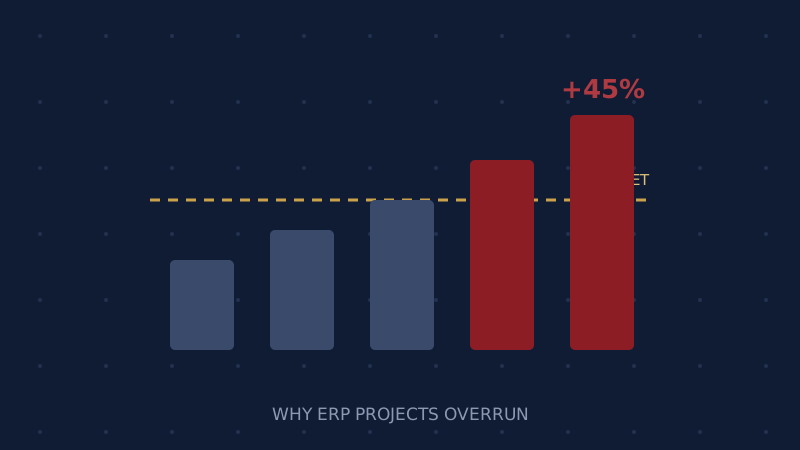
Start with the most sobering dataset in enterprise IT. McKinsey, working with the University of Oxford, analysed over 5,400 large IT projects and found they run 45% over budget and 7% over time on average — while delivering less value than promised. Industry analyses of ERP specifically put the share of projects that fail to meet their objectives at 55% to 75%.
The causes are just as well measured. Surveys of ERP overruns repeatedly land on the same three: underestimated staffing (~38%), scope expansion (~35%) and data or technical issues (~34%). Notice what is missing from that list: the software. ERP projects rarely fail because the product cannot do the job; they fail because the organisation around the project was mis-planned.
Each cause has a practical antidote. Staffing: insist on named consultants with the right module depth before signing — not a rate card and a promise. Scope: freeze what 'done' means in writing, and treat every addition as a costed decision rather than a favour. Data: start migration work in week one — mapping, cleansing, mock loads — because opening balances that don't reconcile are the single most common go-live delay.
There is also a structural fix, and it is the reason we deliver support-first: most of the risk above comes from doing too much at once. A running system, stabilised and understood, is the safest foundation for change — small tested releases, then bigger moves once the foundations have proven themselves. Boring beats broken.
Sources: McKinsey & Oxford — Delivering large-scale IT projects; Testhouse — 55% of ERP projects exceed budgets; Pemeco — Why ERP failure rates exceed 50%.