
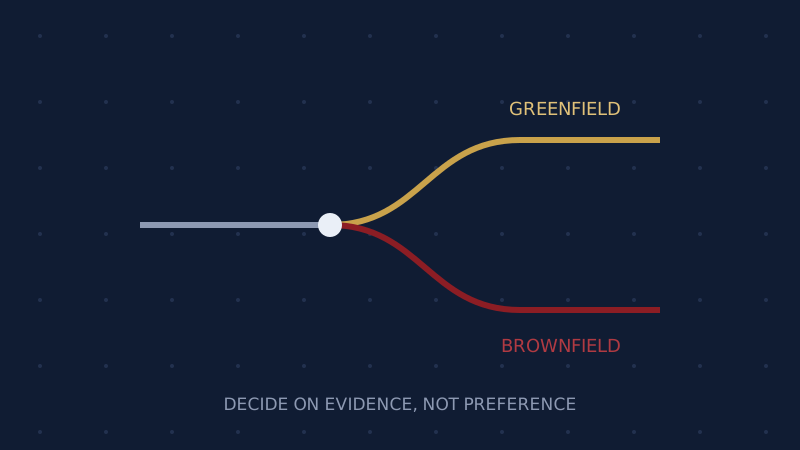
Ask three system integrators about greenfield versus brownfield and you may get three confident, incompatible answers. The uncomfortable truth is that both routes work, both routes fail, and the deciding factors sit in your landscape — not in anyone's methodology deck.
Greenfield — a fresh implementation — buys you a clean process design, clean master data and freedom from a decade of accumulated decisions. Its price is disruption: the business re-learns its system, historic data lives in an archive rather than in transactions, and the change-management effort is real.
Brownfield — a system conversion — preserves your history, your customisations and much of your users' muscle memory. Its price is that you carry your past forward: process debt, dormant code and old configuration decisions arrive in the new system unless you deliberately clean as you convert.
Our framework asks four questions. One: how much of your customisation still earns its keep? Two: would your process owners redesign their workflows today if given the chance — and do they have the energy to? Three: can your business absorb a re-implementation's disruption, or is continuity the binding constraint? Four: what does your data deserve — a fresh start or a faithful carry?
Score those honestly and the route usually names itself. And when the answers conflict, selective transition — new core, chosen history — is a legitimate middle path, not a compromise. What matters is that the decision is made on your evidence, once, with the trade-offs written down.