
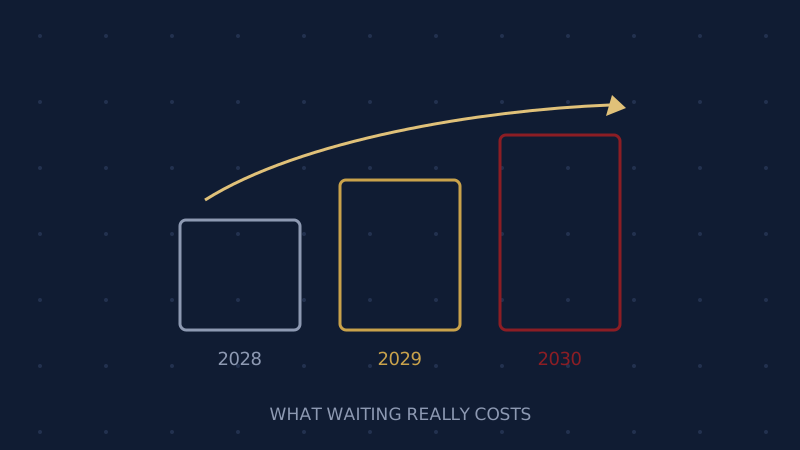
Let us be fair to the stay-put option first. SAP's extended maintenance keeps ECC systems on EhP 6–8 supported from 2028 through the end of 2030, for a premium of about 2% on the annual maintenance base. For a business mid-way through an acquisition, a leadership change or a difficult year, buying three more years of certainty can be entirely rational.
But the premium is the smallest line in the true cost. The larger ones: three more years of custom code accumulating on a platform you will leave; integration work built twice — once against ECC now, again after the move; skills becoming scarcer and dearer as the remaining ECC consultant pool shrinks; and the migration itself landing in 2029–2030, exactly when everyone else who waited is bidding for the same delivery capacity.
There is also a subtler cost: optionality. Move early and you can choose a phased, selective route with rehearsals and fallbacks. Move against a hard deadline and the calendar chooses for you — usually the fastest technical conversion, with process improvements deferred to 'phase two', which every practitioner knows is the phase that never comes.
Our advice cuts both ways. If you stay: make it a written decision with a date attached — retire dead custom code now, freeze non-essential ECC investment, and bank the savings for the move. If you go: an assessment this year makes 2027 comfortable instead of frantic. What we would not recommend is the third option most businesses actually take: not deciding.
Sources: SAP maintenance strategy; SAP Licensing Experts — Extended maintenance 2027–2030; All for One — SAP maintenance after 2027.